


A Bit of History
Canal Frenzy
1825
In February 1825 elections were held at Wantons to select the commissioners who would choose a permanent seat. Circuit ministers regularly preached at Wanton’s, it was becoming the center of hub of the area with a post office opened in Wanton’s in 1826. Later in 1825, Micanopy became the principal chief of the unified Seminole Indians.
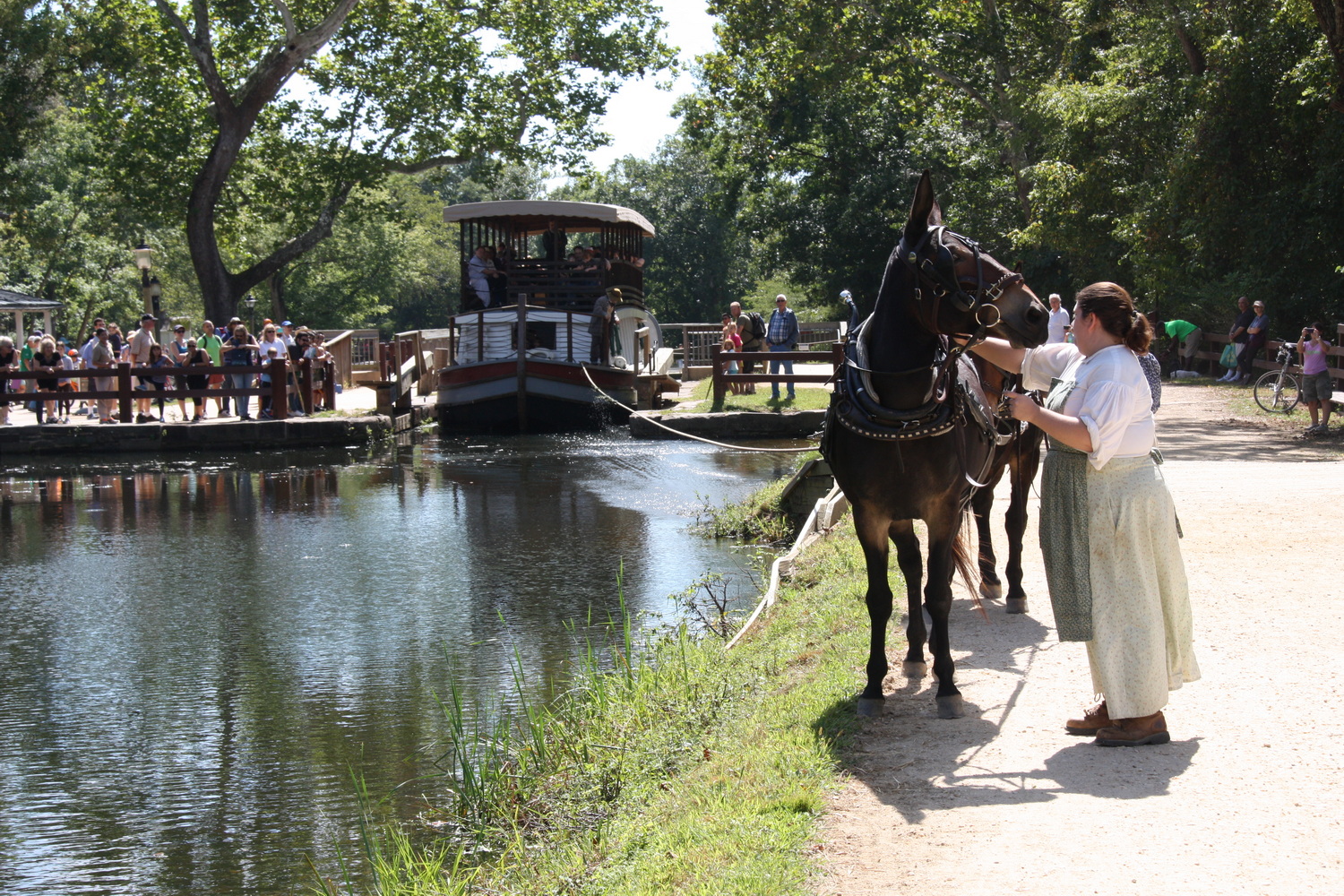
Re-enactment
of barge pulled by mule on C&O Canal at Great Falls canal lock
2013
 Me
at Great Falls on the C&O Canal 2015
Me
at Great Falls on the C&O Canal 2015
In 1825 waterways were the primary means for long distance travel and transportation of goods throughout the United States. Steamships were just begin to ply the waters making relatively fast travel between cities on the east coast. Expansion inland generally followed the navigable rivers, where smaller ships and barges could go further inland and cities sprang up alongside rivers. In the “older” northern states, roads were built that were becoming civilized enough for reasonable travel by wagons and carriages, but waterways were the best method for commerce.
 Me
(right) with friends at end of 160 mile bike ride on the C&O Canal
1997
Me
(right) with friends at end of 160 mile bike ride on the C&O Canal
1997
The thing about rivers is they don’t go everywhere but follow the natural contours of the land, and invariably, emptying into the sea. Men thought he could improve upon this natural phenomena by building their own waterways or canals. While canals, common in Europe and as old as Europe itself, few existed in the Unites States. George Washington was the president of Potomac Company formed in 1875 built a canal on the Virginia side of the Potomac River to circumvent the Great Falls on the river, although it was generally considered a failure. The more successful Chesapeake and Ohio Canal, or C&O Canal, was built later on the Maryland side of the river and operated from 1831 until 1924 and transversed 184 miles from downtown Washington D.C. to Cumberland Maryland.